
Gran Selezione has become one of the central elements of Chianti Classico’s strategy to raise its profile and it protects a designation that, over time, has become an integral part of Chianti Classico’s commercial and production identity.
First off.. This is worth noting. Chianti Classico DOCG and standard Chianti DOCG are two completely separate, independent wine appellations in Tuscany, rather than one being a subzone of the other. Since 1996, each has operated under its own distinct territory, governing consortium, and production rulebook. Chianti Classico is restricted to the original, higher-elevation hilly zone delimited in 1716 between Florence and Siena. The zone was already known for its high quality of wines and was particularly suited to the growing of the Sangiovese grape variety.
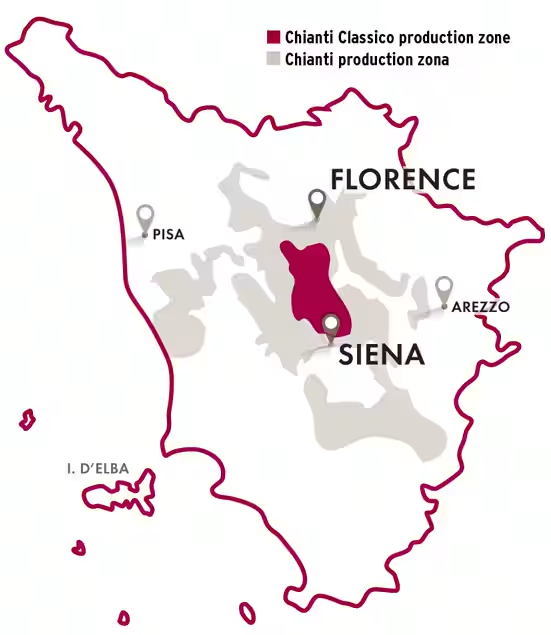
Standard Chianti surrounds this core and spans a much broader, flatter geographical footprint. That does not mean that standard Chianti is necessarily of lesser quality and a number of top producers have vines in both regions, but, with a few notable exceptions, Chianti DOCG is considered to be a less expensive wine. Chianti Classico mandates at least 80% Sangiovese and allows only red blending grapes like Canaiolo, Colorino, Cabernet Sauvignon, or Merlot. Standard Chianti requires 70% Sangiovese and still permits a small percentage of white grapes in most subzones, up to 10% (e.g., Trebbiano, Malvasia). Lastly Chianti Classico has stricter rules that are more oriented towards a qualitative production (lower yield per hectare, a longer minimum period of aging, etc.).
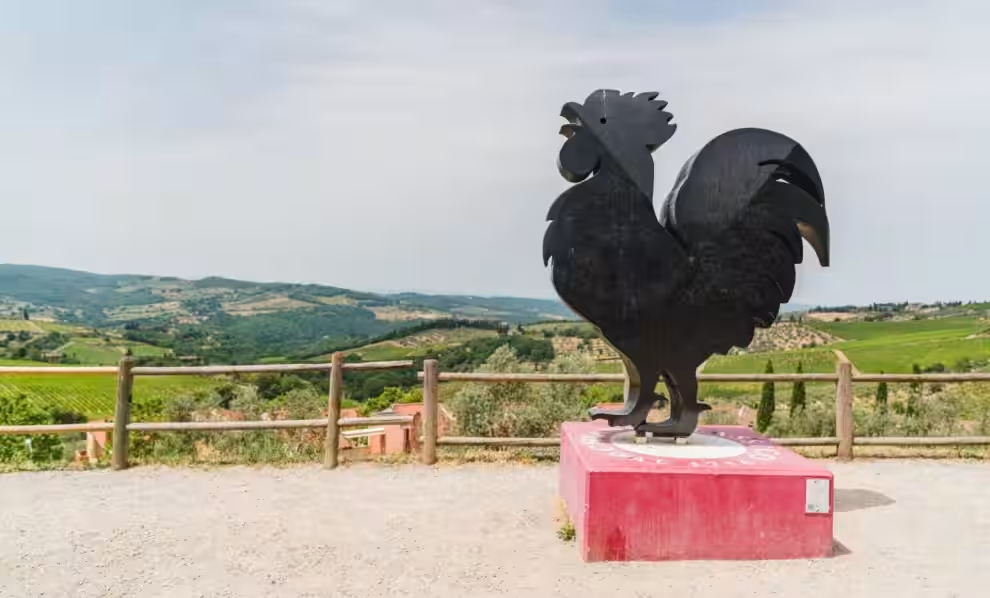
Anyway, that said, from now onwards, in a win for the Consorzio Vino Chianti Classico, the Gran Selezione designation will be reserved exclusively for Chianti Classico DOCG. This was established by the legislative amendment that the Italian Senate gave final approval to on November 4th 2026. The step ends a long debate over the right to use one of the most representative designations of the Black Rooster appellation and recognises the exclusive right of Chianti Classico to the designation, which it started introducing into its production rules in 2014. The history of the black rooster is largely unknown before it was used by the Lega del Chianti, in 1384, with a slightly funny legend, that we will not repeat, about two knights and meeting at Castello Fonterucoli, no less.
For the Black Rooster producers, Gran Selezione has become a tool to strengthen the link between quality, territorial identity and the recognisability of individual labels, supporting the appellation’s growth on Italian and international markets. This journey has helped establish Chianti Classico as one of the benchmark appellations for premium Italian wine. The amendment approved by the Senate now formally recognises this journey, giving the appellation greater certainty about the future use of the designation.